How one man used travel not as escape — but as transformation.
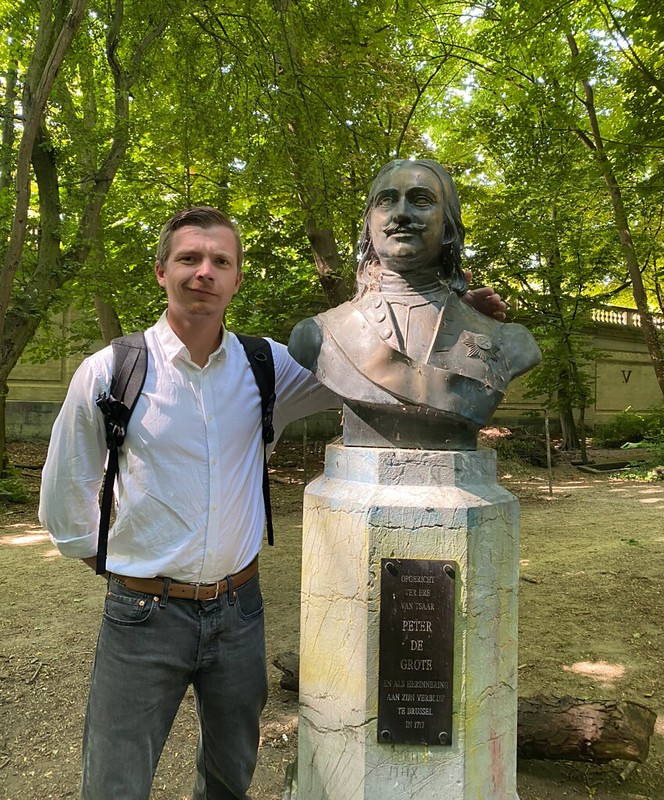
Peter the Great stands out in history not just for building St. Petersburg or modernizing Russia, but because he understood something remarkably modern: travel changes people — and changed nations.
At a time when rulers rarely left their courts, Peter took the opposite path. He moved, observed, worked, studied, wandered, questioned, and returned home with a mission.
Here’s why he remains one of the most important travellers in history.
1. He travelled to learn, not to be seen
Most monarchs toured Europe in grand processions. Peter travelled incognito, wearing a soldier’s uniform, calling himself “Pyotr Mikhailov,” and working alongside carpenters, sailors, and scientists.
He wasn’t after luxury or spectacle — he was chasing knowledge.
He believed that you cannot modernize a country if you do not first modernize yourself.
2. He used travel as a tool of state reform
Peter’s journeys were never just curiosity trips. Everything he studied abroad became a reform at home:
- Shipbuilding → built the Russian Navy
- City planning → founded St. Petersburg
- Military discipline → reformed the Russian army
- Administrative systems → reshaped government ministries
- Scientific curiosity → created Russia’s first academies
Travel, for him, was strategy.
3. He broke the tradition of isolation
Russia at the time was largely inward-looking, religiously conservative, and suspicious of Western ideas. Peter’s travels blasted open that isolation.
He showed a new model of leadership:
a ruler who looks outward, not inward.
Because he moved, Russia moved.
4. He connected with all levels of society abroad
Unlike most aristocrats, Peter didn’t limit himself to courtly salons. He visited:
- universities
- shipyards
- medical theatres
- factories
- observatories
- artisan workshops
- taverns and common houses
He learned as much from craftsmen as from kings.
He broke a barrier between “high” and “low” travel — something we still value today.
5. He proved that travel can be transformative at any scale
Peter didn’t treat travel as a break from ruling; he treated ruling as something that required travel.
He returned from Europe:
- cutting noblemen’s beards
- reforming calendars
- introducing Western clothing
- founding schools
- building new fleets
- reorganizing entire cities
Travel didn’t give him memories — it gave him mandates.
6. He embraced discomfort
Peter endured cramped cabins, muddy shipyards, early mornings, hard labour, and constant study.
He slept little, observed everything, and forced himself into environments far outside his royal bubble.
He didn’t travel to be comfortable.
He travelled to grow.
7. He understood that cultures are toolkits
Where others saw “foreign influence,” Peter saw a menu of possibilities.
From Europe he took:
- Dutch shipbuilding
- English naval tactics
- German administration
- French etiquette and sciences
- Austrian diplomacy
He assembled them into a hybrid system — not copying, but combining.
This is a modern traveller’s mindset: take ideas, adapt them, build something better.
8. He made travel a form of leadership
Peter’s biggest insight was simple but revolutionary:
A leader who travels leads differently.
He showed his nobles — and future generations — that movement brings perspective, and perspective brings progress.
He turned travel into statecraft.
The Legacy of the Travelling Tsar
Peter the Great mattered as a traveller because he used the road, the sea, and the workshop floor as tools to reshape an empire.
His journeys weren’t ornamental; they were foundational.
He embodies the belief that travel, when done with curiosity and humility, can:
- dismantle old assumptions
- open new possibilities
- build bridges across worlds
- transform entire societies
In other words:
Peter the Great travelled not to see the world as it was — but to imagine what Russia could become.
Leave a Reply