We like to believe that the digital world is clean.
That it runs on neat logic, flawless rules, and elegant mathematics. That behind every website, app, and algorithm lies a perfectly ordered machine, humming in deterministic harmony.
And then you meet cache invalidation.
Cache invalidation is the quiet troublemaker of software systems — the moment where certainty dissolves into intuition. It is the art of deciding when a memory is no longer true. When a stored version of reality has drifted too far from reality itself.
A cache, at its core, is an act of trust. We store a copy of the world so we don’t have to look it up again. We remember so that we can move faster. But memory, whether human or digital, is only useful if we know when to question it.
Too much trust, and you live in the past.
Too little trust, and you never benefit from memory at all.
This tension is what makes cache invalidation less engineering and more art.
The Geography of Memory
Think of a city you love.
Perhaps you haven’t been there in years. You carry an image of it in your mind: the smell of its streets, the rhythm of its traffic, the feel of its light. That memory is your mental cache.
But cities change.
New buildings rise. Old neighborhoods gentrify. Cafés close, metro lines extend, markets move. If you return and rely only on your memory, you risk walking into a version of the city that no longer exists.
Cache invalidation is the same problem, but written in code.
When do we refresh our map?
When do we accept that our stored version of reality is obsolete?
There is no universal formula. There is only judgment.
Why This Feels Human
Software engineers often joke that cache invalidation is one of the hardest problems in computer science — alongside naming things and off-by-one errors. But the deeper reason is philosophical.
Cache invalidation is about time.
About change.
About the fragility of truth.
It forces us to accept that knowledge is always provisional. That efficiency comes with risk. That remembering is only powerful if paired with the wisdom to forget.
In that sense, cache invalidation mirrors life itself. We carry assumptions, habits, beliefs — our own cached versions of the world. Growth requires knowing when to invalidate them.
The Beauty of Controlled Forgetting
Perhaps that is why “cache invalidation is art.”
Not because it is chaotic, but because it requires taste, intuition, and humility. A good system does not cling blindly to the past, nor does it discard memory recklessly. It learns to balance.
And in that balance, there is something quietly beautiful.
Maarten’s Note
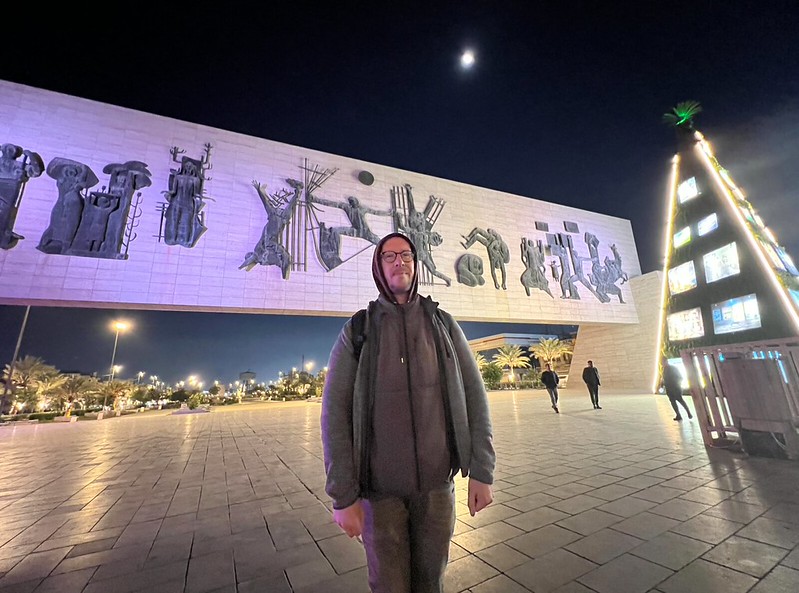
I have often thought of travel as a kind of cache invalidation for the soul. Every time I revisit a place — Beirut, Baghdad, Mexico City — I realize how unreliable my previous version of it was. Streets feel different, people speak differently, the light shifts.
In a way, my journeys are deliberate invalidations of my own assumptions. I refresh my map, not just of the world, but of myself.
Perhaps that is why I am so drawn to this idea: cache invalidation is art. It captures something I have always felt — that curiosity, like good software, requires both memory and the courage to let it go.
— Maarten
Leave a Reply