The flag of Zimbabwe is one of the most symbolic national flags in Africa. Bold, layered, and unmistakable, it tells the story of liberation, identity, sacrifice, and hope — all within a striking combination of colors and symbols.
Adopted on April 18, 1980, the day Zimbabwe officially gained independence, the flag replaced the colonial-era designs associated with Rhodesia. It became a visual declaration that a new chapter had begun.
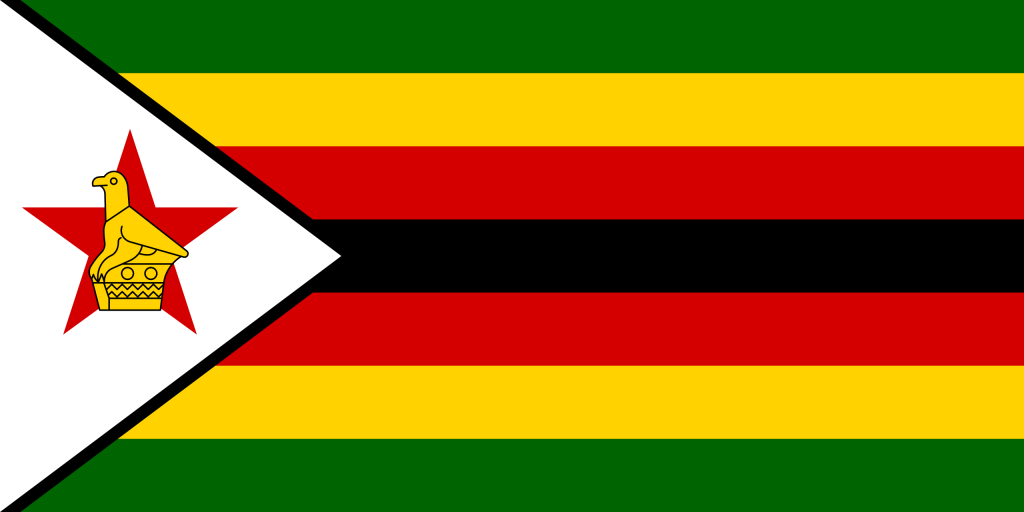
A Flag Born from Independence
For nearly a century, the territory now known as Zimbabwe existed under colonial rule, first as Southern Rhodesia and later as Rhodesia. Following a long and violent liberation struggle, the country emerged as an independent nation in 1980.
The new flag reflected this transformation. Rather than focusing on colonial heritage, it embraced African nationalism and the ideals of independence movements across the continent.
The Meaning Behind the Colors
The Zimbabwean flag consists of seven horizontal stripes and a white triangle on the left side.
Green
Represents the country’s fertile land and agriculture. Zimbabwe’s landscapes range from savannahs to highlands, and farming has historically played a major role in the economy.
Gold
Symbolizes the country’s vast mineral wealth. Zimbabwe contains significant reserves of gold, platinum, lithium, and other resources that have shaped its history and geopolitical importance.
Red
Honors the blood shed during the struggle for independence. The liberation war of the 1960s and 1970s remains deeply embedded in the country’s national identity.
Black
Represents the people of Zimbabwe.
White Triangle
Symbolizes peace and the hope for a stable future after decades of conflict.
The Zimbabwe Bird
At the center of the flag stands one of Africa’s most fascinating national symbols: the Zimbabwe Bird.
The bird is inspired by soapstone sculptures discovered at the ancient city of Great Zimbabwe, a medieval African kingdom that gave the country its modern name. These sculptures remain mysterious; historians still debate whether they represented royalty, spirituality, or sacred guardianship.
Today, the Zimbabwe Bird appears not only on the flag, but also on coins, government buildings, and official emblems across the country.
A Flag That Stands Out
Many African flags use Pan-African colors, but Zimbabwe’s design feels especially layered. The combination of stripes, the triangle, the red star, and the bird creates a flag that is both political and deeply historical.
Unlike minimalist flags, Zimbabwe’s banner almost reads like a compressed national narrative:
- the land,
- the struggle,
- the people,
- the resources,
- the future,
- and the memory of an ancient civilization.
QuixoticGuide Note
Zimbabwe’s flag is a reminder that flags are rarely just decorative objects. They often emerge at moments of rupture — revolutions, independence movements, or the collapse of old systems. In Zimbabwe’s case, the flag carries both the optimism of 1980 and the complicated legacy of the decades that followed.
Yet visually, it remains one of the most recognizable and symbolically dense flags in the world.