The flag of the United States is one of the most recognizable national symbols on Earth. Commonly known as the “Stars and Stripes,” the flag combines simplicity with immense symbolic weight — representing revolution, federalism, expansion, patriotism, and global influence.
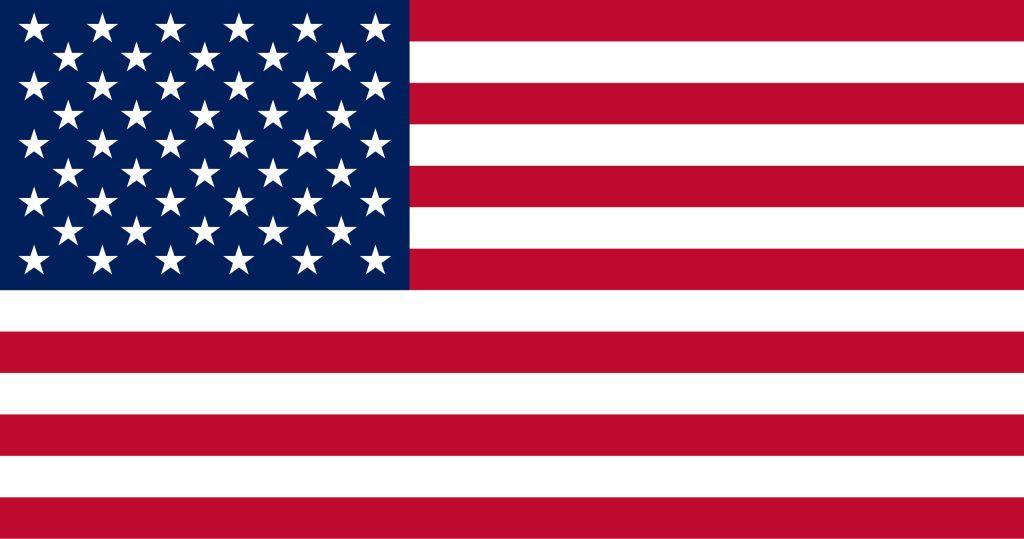
Today’s design features:
- 13 horizontal stripes,
- 50 white stars,
- and a blue canton in the upper left corner.
The current version became official on July 4, 1960, after Hawaii became the 50th state.
The Meaning Behind the Flag
The 13 Stripes
The red and white stripes represent the original thirteen British colonies that declared independence from Britain in 1776.
These colonies formed the foundation of the modern United States.
The 50 Stars
Each white star represents one U.S. state.
As the country expanded westward and new states joined the union, stars were gradually added to the flag. The number of stripes, however, remained fixed at thirteen to preserve the memory of the original colonies.
The Colors
Although the colors were not officially assigned meanings at first, they later became associated with:
- Red — valor and courage,
- White — purity and innocence,
- Blue — vigilance, perseverance, and justice.
A Flag That Evolved with Expansion
The American flag has changed more times than most national flags.
Since independence, it has had 27 official versions as new states entered the union. At different points in history, the flag carried:
- 15 stars,
- 20 stars,
- 48 stars,
- 49 stars,
- and eventually 50.
This makes the flag almost a visual timeline of American territorial growth.
From Revolution to Global Symbol
The U.S. flag began as a revolutionary banner against British colonial rule, but over time it became associated with far larger global themes:
- democracy,
- military power,
- capitalism,
- migration,
- technological progress,
- and American cultural influence.
Few flags have appeared in so many contexts:
- on the Moon during the Apollo missions,
- at global sporting events,
- during wars and protests,
- and across Hollywood films, music, and popular culture.
Because of this, the flag often carries different meanings depending on who is looking at it.
Symbolism and Debate
The American flag is also deeply political.
For some, it represents:
- freedom,
- opportunity,
- and national unity.
For others, it can evoke:
- foreign interventions,
- polarization,
- inequality,
- or contested interpretations of history.
This tension is part of what makes the flag so globally recognizable: it is not merely a national symbol, but a symbol constantly debated and reinterpreted.
One of the World’s Most Influential Flag Designs
The stars-and-stripes format inspired numerous other flags around the world, especially in the Americas and Liberia.
Its bold geometry also made it ideal for visibility and reproduction, helping transform it into one of the most commercially reproduced flags in history.
Today, the American flag exists simultaneously as:
- a state symbol,
- a cultural icon,
- a political statement,
- and a global brand.
QuixoticGuide Note
The flag of the United States is impossible to separate from the scale of American influence itself. Few national symbols have traveled so widely or accumulated so many meanings over time.
What began as the flag of thirteen rebellious colonies eventually became the banner of a superpower — carried from battlefields to moon landings, from immigration stories to protest movements, from patriotism to criticism. Few flags contain so many contradictions within a single piece of cloth.