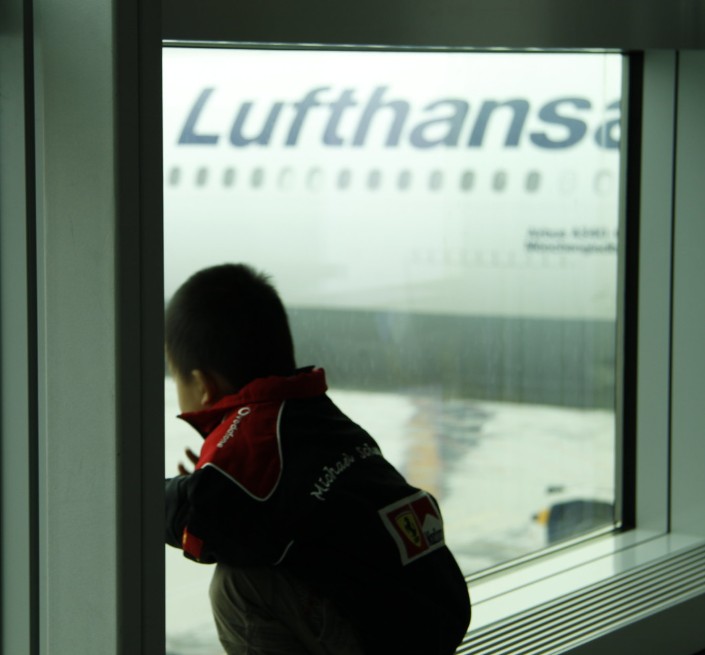
Airports do not just connect places — they reflect how the world actually works. Strip away the marketing slogans and glossy terminals, and airports become brutally honest spaces. They reveal who moves freely, who waits, who is welcomed, and who is merely tolerated.
More than any city square or parliament building, airports show global reality in real time.
Passports, Power, and Invisible Hierarchies
At passport control, the world’s inequality becomes procedural.
Two travelers may arrive on the same flight, yet experience entirely different realities. One walks through automated gates in seconds; the other queues for an hour, documents scrutinized, questions asked, purpose doubted. The difference is not behavior — it is birthplace.
Airports quietly rank nationalities through visa regimes, fast-track lanes, and trusted-traveler programs. These hierarchies are never announced, yet everyone feels them.
The terminal becomes a geography of privilege.
Technology Gaps in Plain Sight
Move through enough airports and the technological divide becomes unmistakable.
At Singapore Changi Airport, facial recognition replaces boarding passes. Bags arrive before passengers do. Silence is engineered.
At other airports, power cuts halt check-in, Wi-Fi barely exists, and handwritten gate changes appear taped to walls.
Both are airports. Both are part of the same global system. Yet they operate decades apart.
Progress, like travel, is unevenly distributed.
Routes That Exist — and Routes That Don’t
Airports also mirror geopolitics through their route networks.
Some cities are connected to everywhere: London, Paris, Dubai. Others remain isolated, not because of distance, but because of politics, sanctions, or instability.
An airport’s departure board can tell you:
- Which countries are economically trusted
- Which borders are politically closed
- Which regions are strategically important
The absence of a destination often speaks louder than its presence.
Labor, Migration, and the Global Workforce
Behind the scenes, airports expose global labor realities.
- Cleaners working overnight while passengers sleep in lounges
- Ground staff handling luggage across continents they may never visit
- Migrant workers arriving with one-way tickets and temporary visas
At hubs like Dubai International Airport or Doha Hamad International Airport, the airport itself is sustained by a multinational workforce whose mobility is tightly controlled — even as they facilitate the mobility of others.
Airports sell freedom, but operate on constraint.
Crisis, Control, and Collective Anxiety
Airports are also where global crises become visible first.
Pandemics, wars, volcanic ash clouds, system outages — airports absorb shock before cities do. Cancelled flights ripple across continents within minutes. Departure boards turn red. People sleep on floors.
In moments of crisis, airports reveal how fragile global movement really is — and how quickly borders harden when fear appears.
Airports as Political Statements
Some airports are deliberately monumental.
- Vast terminals signaling national ambition
- Flag-lined halls asserting sovereignty
- Architecture designed to impress, intimidate, or reassure
Airports like Istanbul Airport or Beijing Daxing International Airport are not just transport hubs — they are geopolitical declarations, built to say we matter, we connect, we lead.
Concrete diplomacy.
A World Condensed Into One Building
An airport is where:
- Wealth and precarity walk the same corridor
- Languages overlap for seconds and disappear
- Borders are enforced with scanners, stamps, and silence
No other place compresses global reality so efficiently.
Cities can pretend. Airports cannot.
They show us the world as it is — fragmented, interconnected, unequal, ambitious, fragile — all within walking distance of Gate 42.
And perhaps that is why frequent travelers learn to read airports the way others read maps: not as neutral spaces, but as mirrors of the planet we are moving through.
Leave a Reply