Dirk Hartog Island
There are places where the world feels unfinished.
Not undeveloped — unfinished.
As if the map reached its limit and decided to stop drawing.
Dirk Hartog Island is one of those places.
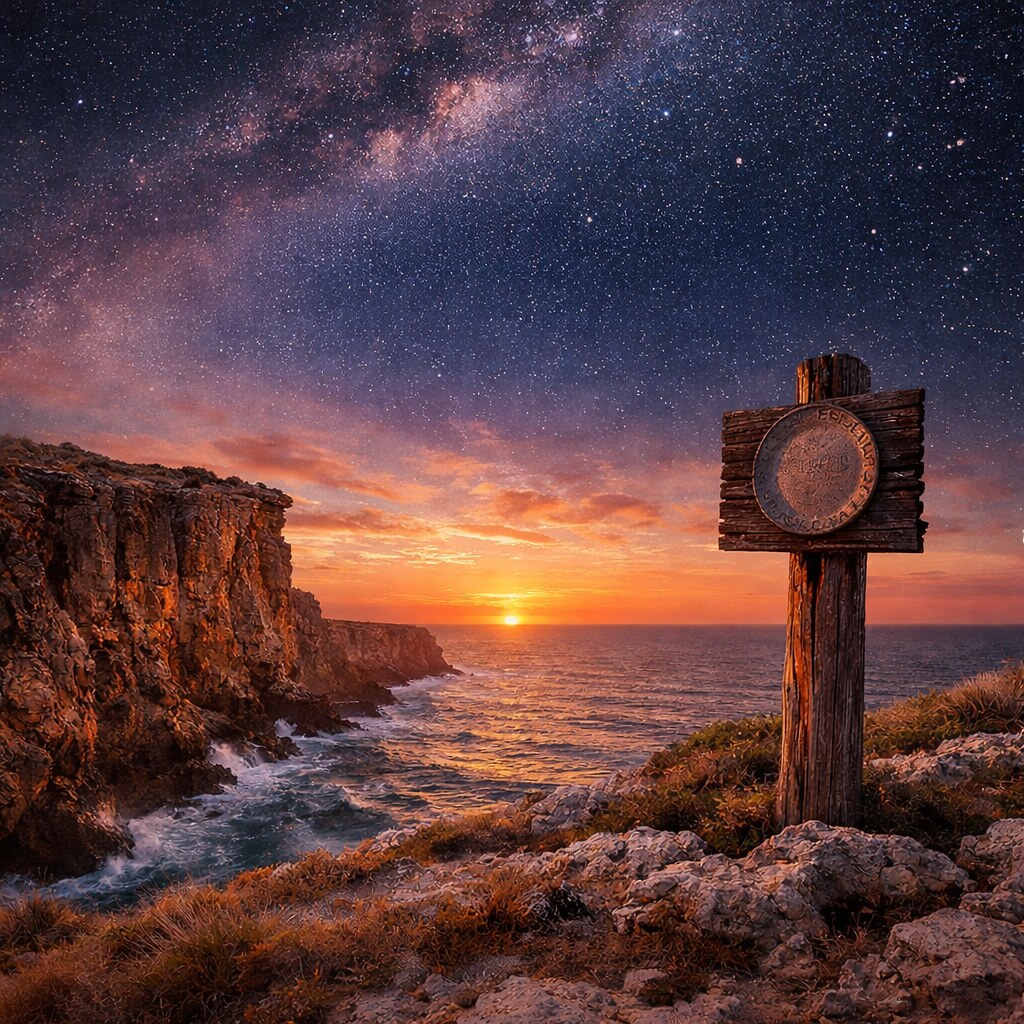
The First Landing
In 1616, Dutch navigator Dirk Hartog stepped ashore here and left behind a pewter plate nailed to a wooden post. A simple act. A name carved into geography.
Europe had touched Australia.
The plate is gone now — carried back across oceans — but the wind remains. Standing at Cape Inscription, you don’t feel triumph. You feel scale.
Four centuries pass quickly in cities.
Out here, they dissolve.
Silence as Geography
The island stretches more than 80 kilometers along the western edge of Western Australia, forming part of the greater Shark Bay World Heritage area.
But statistics mean nothing here.
There are no skylines.
No cranes.
No background hum of infrastructure.
Just limestone cliffs dropping into the Indian Ocean.
Salt lakes flashing white inland.
The horizon unbroken in every direction.
Silence here isn’t the absence of noise.
It’s the presence of space.
The Psychology of the Edge
Modern travel is acceleration.
Airports. Connections. Notifications. Movement measured in miles and megabytes. I’ve written before about the compression of distance — how we can cross continents faster than news once traveled between villages.
Dirk Hartog Island resists compression.
You cannot rush remoteness.
You cannot scroll through a landscape like this.
The ferry is slow.
The roads are rough.
The night is completely dark.
And that darkness is not threatening — it is clarifying.
Return to 1616
The island is part of a conservation effort known as “Return to 1616,” restoring the ecosystem to how it might have existed before European settlement. Native species are reintroduced. Feral ones removed.
It is an unusual concept: to rewind.
To attempt ecological time travel.
Standing there, you begin to wonder whether travel itself is also a form of rewinding — stripping away the excess layers of modernity until only geography remains.
Western Silence
Australia’s eastern cities face the Pacific — outward, toward the world.
The west faces emptiness.
The Indian Ocean is vast and indifferent. No neighboring skyline flickers on the horizon. If you sail west from here, you commit to distance.
There is something honest about that.
This island does not perform for visitors.
It does not curate itself.
It does not ask to be photographed.
It simply exists.
Maarten’s Note
Some destinations impress.
Some entertain.
Some educate.
Places like Dirk Hartog Island recalibrate.
After megacities, conflict zones, hyper-connected hubs — standing on a cliff where the wind has outlived empires feels like a necessary correction.
Travel is not only about movement.
Sometimes, it is about reaching the edge — and discovering that silence is not empty at all.
It is full of perspective.
Leave a Reply