There is a version of Moscow that most visitors never see.
Not the onion domes.
Not the vast avenues.
Not the metro palaces.
But a Moscow buried 65 meters underground — built for a world that believed the sky could end in a flash of light.
Welcome to Bunker 42, one of the Soviet Union’s most secret Cold War installations, now transformed into one of the most atmospheric museums in Russia.
And descending into it feels less like sightseeing — and more like entering history’s nervous system.
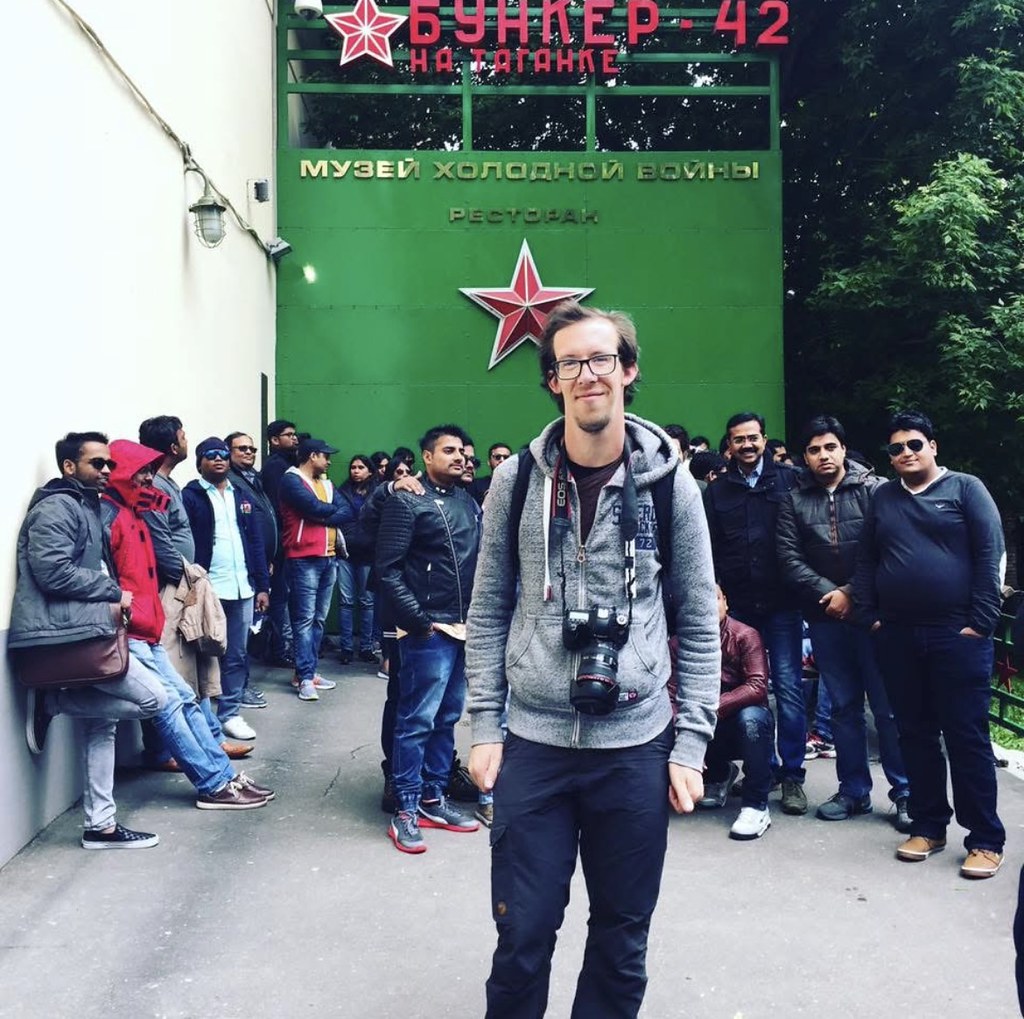
A Fortress for the End of the World
During the height of Cold War tensions in the 1950s, the Soviet Union constructed this underground command post beneath central Moscow. Officially known as the Tagansky Protected Command Point (GO-42), the bunker served as a communications hub for long-range aviation forces.
If nuclear war broke out, this is where decisions would be made.
Built using the same engineering techniques as the Moscow Metro system, the bunker included:
- Thick steel blast doors
- Independent air-filtration systems
- Water and food reserves
- Diesel generators
- Secure communication lines
It was designed to operate autonomously if the surface became uninhabitable.
The irony? Above ground, daily life continued — markets, theatres, weddings — while below, preparations were made for apocalypse.
The Descent
The entrance today is surprisingly discreet, located near Taganskaya Metro Station.
You step inside an ordinary-looking building.
Then the stairs begin.
Down.
Further down.
And down again.
The temperature drops. The air thickens. The light shifts to industrial dimness. Heavy hermetic doors line the corridors. Everything echoes.
It is not a polished museum space. It feels functional. Purpose-built. Serious.
Inside, you’ll find preserved communication rooms, Soviet-era equipment, propaganda materials, gas masks, maps, and simulation rooms recreating crisis scenarios. Some tours even simulate a nuclear launch decision — a sobering reminder of how close the world once stood to irreversible catastrophe.
What Makes Bunker 42 Different
Many Cold War museums display artifacts.
Bunker 42 is the artifact.
You are not looking at history in a glass case. You are standing inside the infrastructure that shaped global strategy for decades.
For someone like you, Maarten — who has stood in cities shaped by conflict, tension, and layered history — this place fits perfectly into the Quixotic ethos: travel not just to see beauty, but to understand power.
Moscow above ground tells one story.
Moscow below ground tells another.
Practical Notes for Travelers
- 📍 Location: Central Moscow, near Taganskaya
- 🕳 Depth: ~65 meters underground
- 🎟 Guided tours required (Russian and limited English options available)
- ⏳ Allow 1.5–2 hours
It pairs well with a deeper exploration of Moscow’s metro architecture — itself a monument to ideology, engineering, and symbolism.
Maarten’s Note
I’ve always believed that cities have two maps:
The visible one — streets, monuments, skylines.
And the invisible one — fear, ambition, contingency.
Bunker 42 belongs to the invisible map.
It’s easy to romanticize the Cold War now. But walking those corridors reminds you that history was once lived in tension, in preparation, in waiting.
Travel isn’t only about discovering what was built.
It’s about understanding why it was built.
And sometimes, the most powerful places are the ones hidden beneath your feet.
Leave a Reply