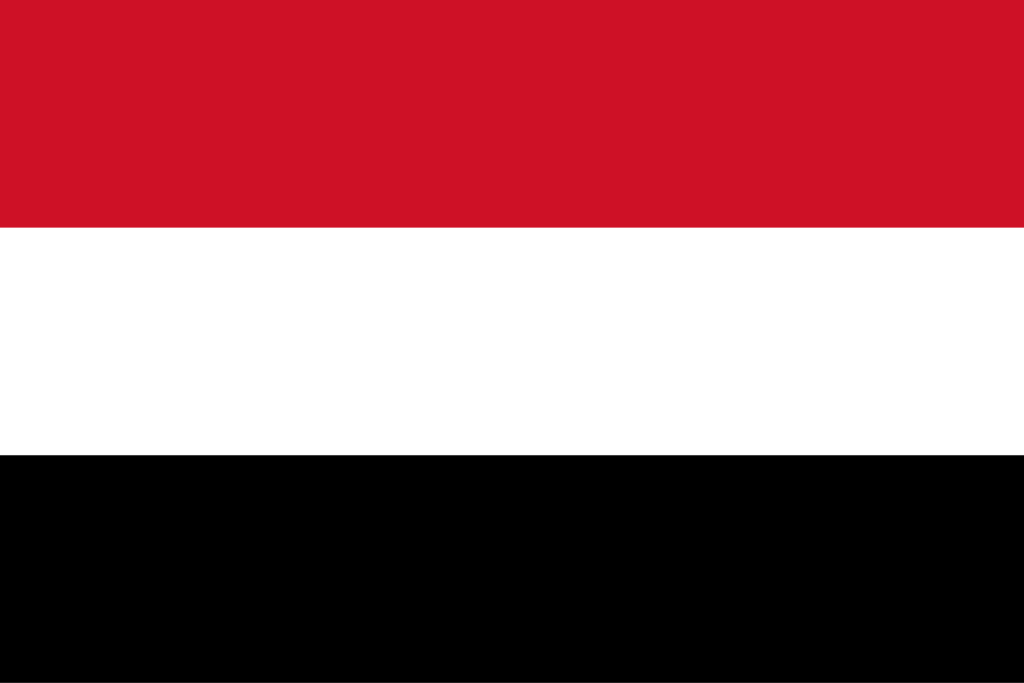
The flag of Yemen is striking in its simplicity: three horizontal stripes of red, white, and black. Yet behind this minimalist design lies a complex story of revolutions, Arab nationalism, division, and unification.
Adopted on May 22, 1990, the flag became the symbol of a unified Yemen after the merger of North Yemen and South Yemen — two states that had existed separately for decades.
Today, despite the country’s ongoing political fragmentation and conflict, the flag remains one of the few symbols still claimed across much of Yemen’s deeply divided landscape.
The Meaning of the Colors
The Yemeni flag uses the classic Pan-Arab colors, shared in different forms by many Arab states.
Red
Represents revolution, sacrifice, and the struggle against oppression.
White
Symbolizes hope, peace, and the aspiration for a better future.
Black
Traditionally represents the darker periods of history and the overcoming of past oppression.
Together, these colors connect Yemen to the wider history of Arab nationalism and the movements that reshaped the Middle East during the 20th century.
A Flag of Unity
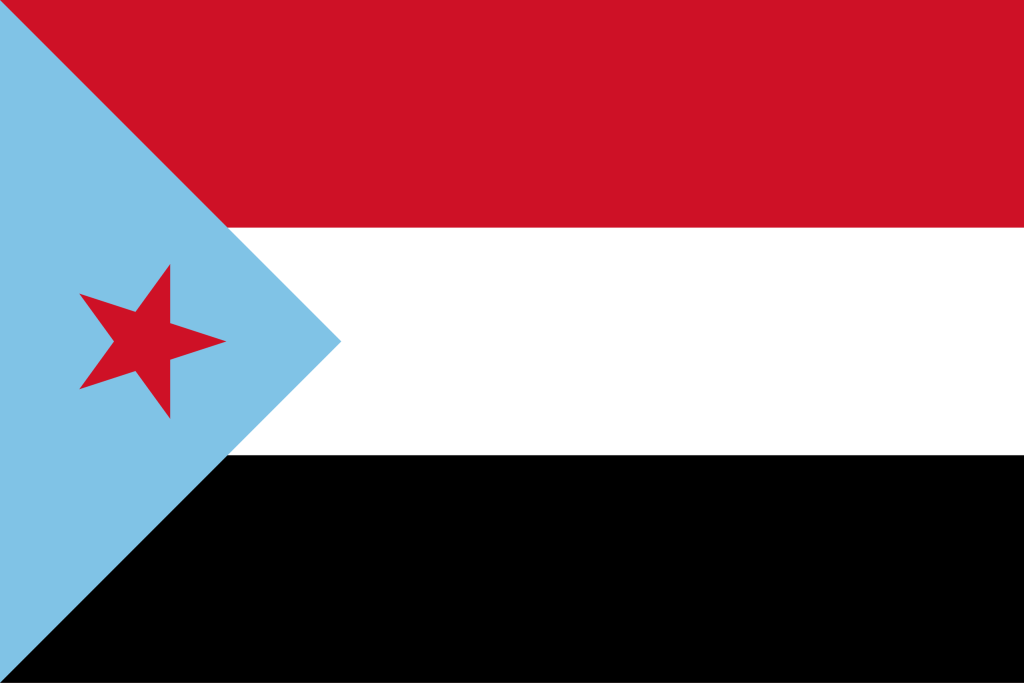
Before unification, Yemen was divided into two countries:
- The Yemen Arab Republic (North Yemen)
- The People’s Democratic Republic of Yemen (South Yemen)
Both used flags inspired by Pan-Arab symbolism, though South Yemen included a light blue triangle and red star.
When the two states united in 1990, the new republic adopted the current tricolor design — visually similar to the flags of countries like Egypt, Iraq, and Syria, but without additional symbols or emblems.
That simplicity was intentional. The flag aimed to represent a shared Arab identity while avoiding imagery too closely associated with one faction or ideology.
One of the Arab World’s Most Minimalist Flags
Unlike many national flags in the region, Yemen’s design contains:
- no eagle,
- no stars,
- no script,
- and no coat of arms.
Its power comes from restraint.
The clean tricolor gives the flag a timeless appearance, while also reflecting the political ideals that shaped much of the Arab world during the mid-20th century.
Yemen Beyond the Headlines
For many outside observers, Yemen is often associated only with conflict, humanitarian crises, and geopolitics. Yet the country possesses one of the oldest continuous civilizations in the Arab world.
From the mud-brick towers of Shibam to the mountain villages around Sana’a and the Indian Ocean landscapes of Socotra, Yemen’s cultural and geographic diversity is extraordinary.
The flag, despite its simplicity, carries the weight of that long history — and the dream of unity that once defined the modern republic.
QuixoticGuide Note
Some flags try to tell an elaborate story through symbols and emblems. Yemen’s flag does the opposite. It strips everything down to three colors and lets history fill in the meaning.
In a country shaped by tribal identities, regional loyalties, ancient trade routes, revolutions, and modern conflict, the simplicity of the flag almost feels deliberate: a rare attempt to create a symbol broad enough for everyone to stand beneath.