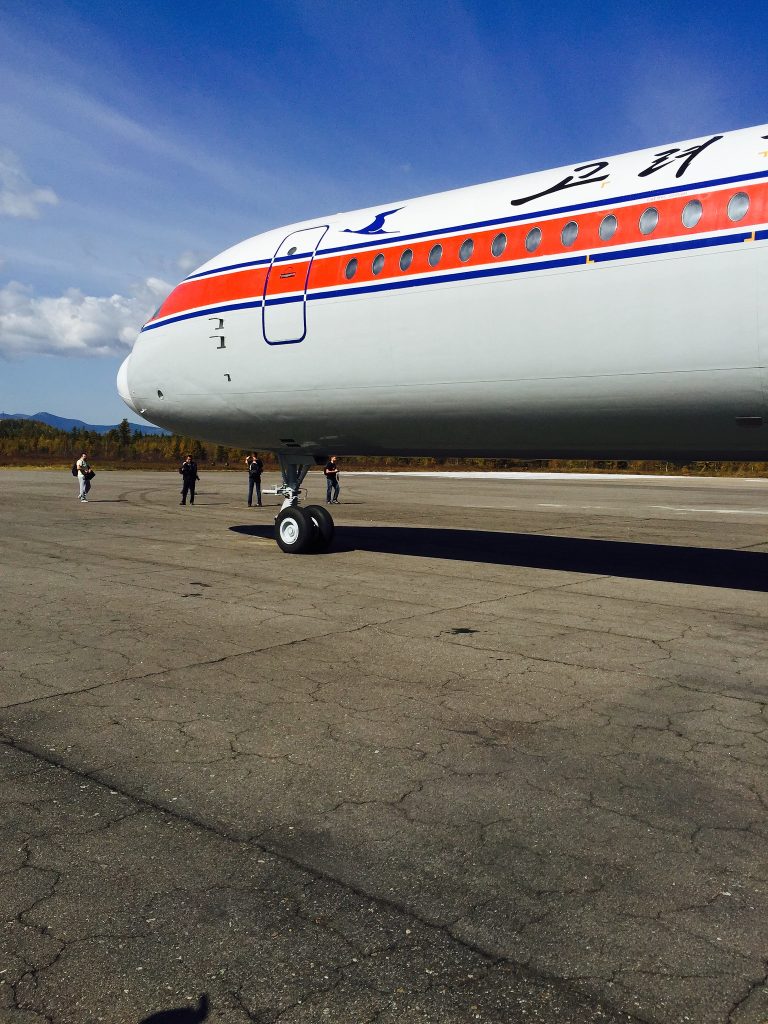
The Ilyushin Il-62: The Soviet Union’s Intercontinental Flagship
When it first took to the skies in 1963, the Ilyushin Il-62 symbolized Soviet ambition and engineering pride. It was the USSR’s answer to Western long-range jets like the Boeing 707 and Douglas DC-8—a four-engine airliner designed to connect Moscow with the world. For decades, it became an unmistakable silhouette at airports from Havana to Pyongyang.
A Distinctive Design
Unlike most Western jets, the Il-62 featured four rear-mounted engines—two on each side of the tail—and a T-tail configuration. This gave it a sleek, futuristic look for its time and made it one of the most recognizable airliners ever built. The design reduced cabin noise and allowed for a cleaner wing, though it also made the aircraft notoriously tail-heavy, requiring a retractable tail support strut during boarding to prevent tipping.
The Soviet Flag Carrier’s Pride
Operated primarily by Aeroflot, the Il-62 became the backbone of the Soviet Union’s international network throughout the 1970s and 1980s. It linked Moscow with destinations as far as Havana, Pyongyang, Tokyo, London, and Montreal—routes that symbolized Soviet reach and diplomacy.
Its range of over 10,000 kilometers made it ideal for intercontinental flights, and it was the first jetliner in Eastern Europe capable of non-stop transatlantic travel.
Operators Beyond the Iron Curtain
Beyond Aeroflot, the Il-62 served as the flagship of many Eastern Bloc and allied nations, including LOT Polish Airlines, Interflug (East Germany), Cubana de Aviación, and Air Koryo. The latter still operates a handful today, making the Il-62 one of the last surviving Cold War airliners still in limited passenger service.
Performance and Versions
- Il-62 (original): Powered by Kuznetsov NK-8 engines.
- Il-62M (modernized): Introduced in 1974 with more efficient Soloviev D-30KU engines, extended range, and improved avionics.
The Il-62M became the definitive version, easily identifiable by its longer tail cone and hush-kit-like engine exhausts.
Accidents and Legacy
Like many aircraft of its era, the Il-62’s record included some tragic crashes, often tied to maintenance or design flaws. Yet, its durability, range, and reliability earned it respect even among Western pilots who encountered it.
For decades, it was also a presidential aircraft, carrying Soviet and later Russian leaders, as well as dignitaries from Cuba, North Korea, and East Germany.
The End of an Era
By the 2000s, the Il-62 had largely disappeared from global skies, replaced by twin-engine jets like the Il-96, A330, and Boeing 767. But for aviation enthusiasts, it remains a fascinating relic—a machine that embodied Cold War grandeur, power, and ambition.
Even today, spotting an Il-62 at Pyongyang Sunan Airport or Havana’s José Martí International is like stepping back into another era of flight—an age when the roar of four rear engines signaled the dawn of global Soviet aviation.