Schiphol may look calm and orderly on most days, but in winter it becomes one of Europe’s most fragile major airports. The reason isn’t just snow, and it isn’t just wind — it’s the combination of both that turns even a routine travel day into a logistical nightmare.
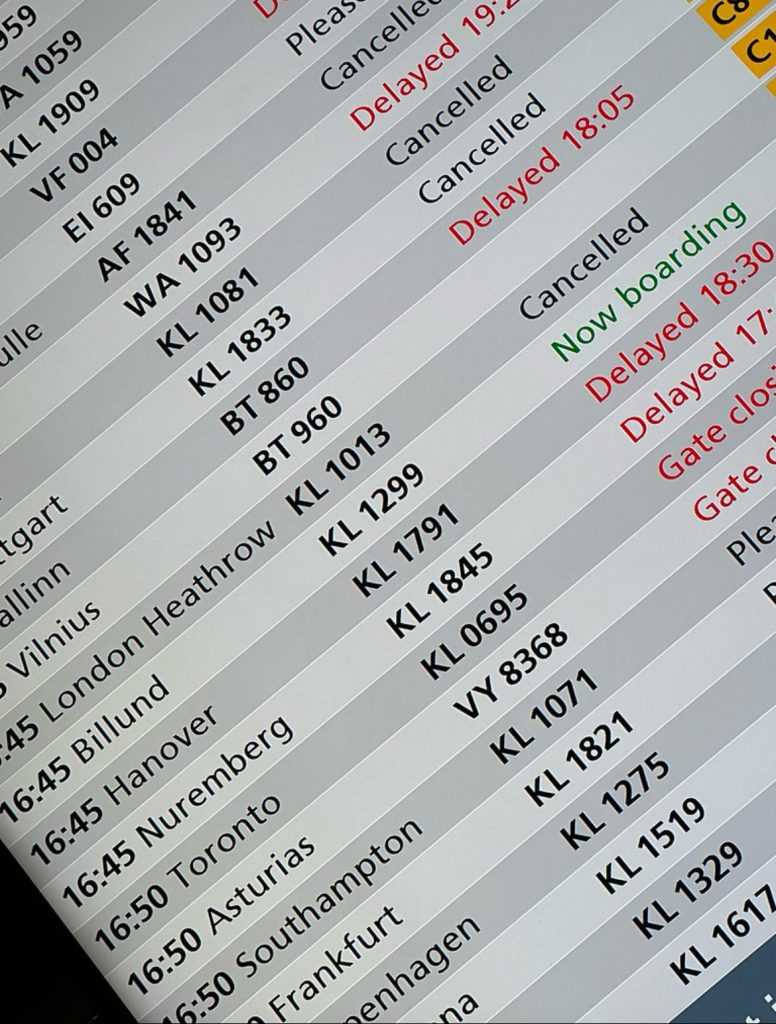
Snow: Small Amounts, Big Consequences
The Netherlands doesn’t get heavy snowfall often, and Schiphol isn’t built for long winters. When snow does fall, even lightly, it overwhelms operations. Runways need constant clearing, aircraft queue for de-icing, and taxi times stretch endlessly across the exposed polder landscape. What might be manageable elsewhere quickly snowballs into delays, missed slots, and cancellations.
Wind: The Silent Capacity Killer
Winter storms bring strong and shifting winds straight off the North Sea. While Schiphol technically has multiple runways, crosswinds and strict noise regulations mean that during windy conditions the airport is often forced to operate on one dominant runway direction. Capacity drops instantly. Landings slow, departures stack up, and the entire rhythm of the airport collapses.
When Snow and Wind Combine
This is where Schiphol truly struggles. Snow slows everything down on the ground; wind removes runway flexibility in the air. De-icing queues grow longer just as available slots disappear. Aircraft are ready but have nowhere to go. Crews time out. Connections unravel. The terminal fills with stranded passengers while the airport still appears “open.”
A Hub With No Slack
As a major transfer hub, Schiphol depends on precision timing. Winter weather removes that margin completely. One disrupted wave spreads across Europe and beyond, and recovery can take days rather than hours.
The Bottom Line
Snow makes Schiphol slow.
Wind makes Schiphol rigid.
Together, they make Schiphol unreliable.
If you’re travelling in winter, Schiphol is a risk — not because it closes, but because it keeps operating just slowly enough to trap you in delays, queues, and missed connections.
Sometimes, the worst airport weather isn’t dramatic chaos — it’s controlled paralysis.
Leave a Reply