Some journeys are about distance. Others are about borders. The Vennbahn manages to be about both — while quietly bending the rules of geography along the way.
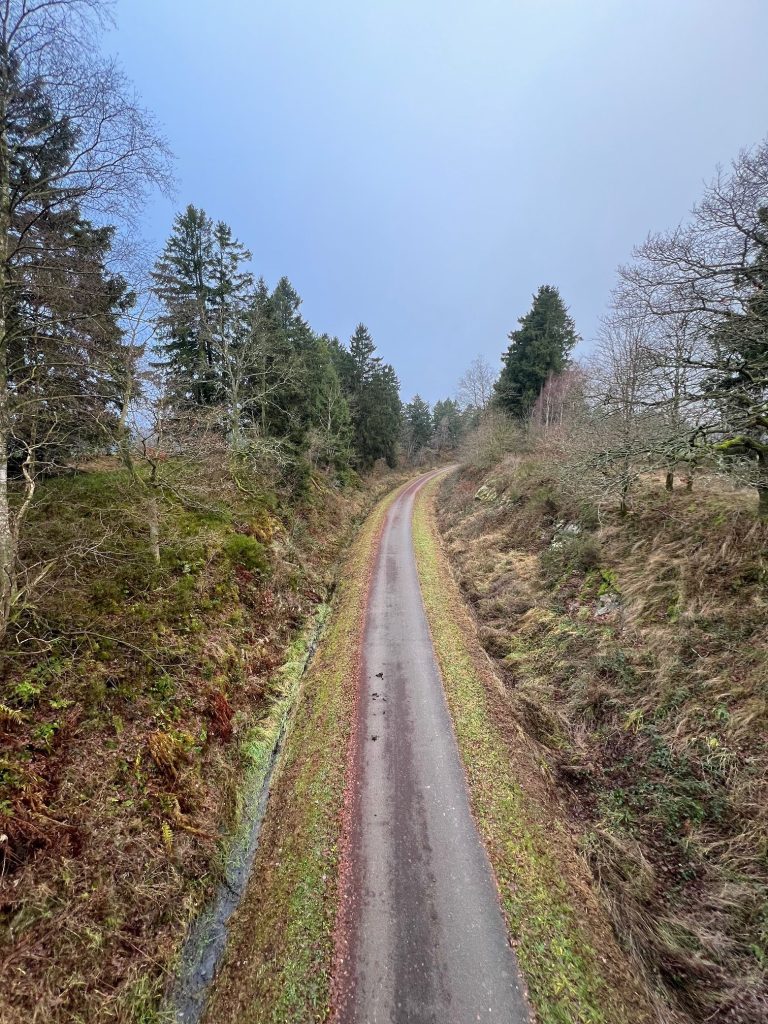
Stretching for roughly 125 kilometres from Aachen (Germany) to Troisvierges (Luxembourg), the Vennbahn follows the former trackbed of a railway line that once stitched together the industrial heart of the region. Today, it is one of Europe’s most beloved long-distance cycling routes — and one of its most peculiar.
A Railway That Redrew the Map
The Vennbahn began life in the late 19th century as a strategic railway connecting Prussia to Luxembourg. After World War I, the Treaty of Versailles reassigned the railway corridor to Belgium. What sounds like a minor administrative detail turned into a geopolitical oddity:
the railway itself became Belgian territory, even where it passed through Germany.
The result? Five German exclaves — tiny pockets of Germany completely cut off from the rest of the country by a strip of Belgian land no wider than a bike path. Few places allow you to cross an international border dozens of times in a single afternoon without noticing — the Vennbahn does exactly that.
Cycling Across Three Countries (Without Trying)
From an experiential point of view, the Vennbahn is wonderfully understated. There are no dramatic border posts, no passport checks, no fanfare. One moment you are in Germany, the next in Belgium, and before you know it you are rolling into Luxembourg — often within the space of a few kilometres.
The route is:
- Fully paved and largely traffic-free
- Gently graded, thanks to its railway origins
- Well signposted, making navigation effortless
It passes through the High Fens (Hohes Venn), one of the most atmospheric landscapes in the Low Countries: peat bogs, pine forests, open plateaus, and quiet villages that feel far removed from the political complexity beneath your wheels.
Stations Without Trains, Borders Without Barriers
Old railway stations have been reborn as cafés, bike hubs, and small museums. Information panels explain not only the industrial past of the line, but also the border quirks it created. It’s a route that rewards curiosity: stop often, read the signs, and you’ll discover how infrastructure can outlive its original purpose — and reshape nations in the process.
For travellers interested in micro-geography, border theory, or simply places where maps become strange, the Vennbahn feels tailor-made.
Why the Vennbahn Belongs on a Quixotic Map
The Vennbahn is not about ticking off sights. It’s about moving through a living footnote of European history. It’s a reminder that borders are often accidental, negotiated, and sometimes absurd — and that travel doesn’t always require distance to feel profound.
For cyclists, it’s accessible and rewarding.
For slow travellers, it’s rich in stories.
For map lovers, it’s irresistible.
And for anyone who enjoys journeys that quietly challenge how the world is organised, the Vennbahn may be one of Europe’s most elegant detours.
Leave a Reply