The flag of Venezuela is one of South America’s most iconic national symbols: a bold tricolor of yellow, blue, and red, crossed by an arc of white stars.
At first glance, it resembles the flags of neighboring Colombia and Ecuador — and that is no coincidence. All three flags trace their origins back to the revolutionary vision of Francisco de Miranda, one of the earliest leaders of Latin American independence movements.
The modern Venezuelan flag was officially adopted in 2006, though its core design dates back more than two centuries to the wars of independence against Spain.
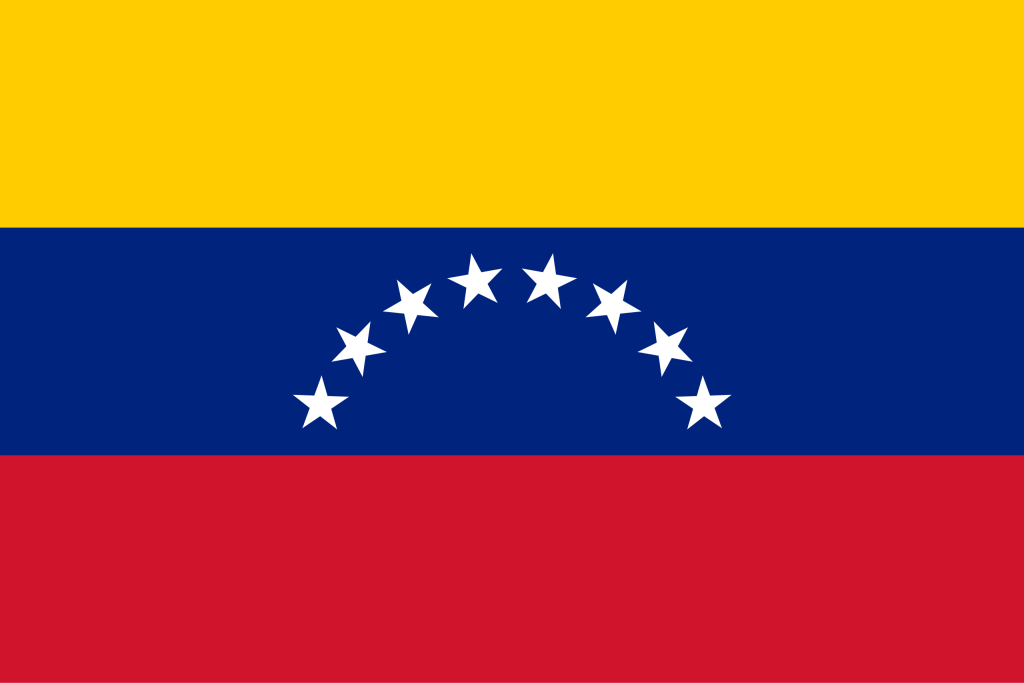
The Meaning Behind the Colors
The Venezuelan flag consists of three horizontal stripes:
Yellow
Represents the wealth of the nation — especially its natural resources, fertile land, and historical riches.
Blue
Symbolizes the Caribbean Sea and the waters separating Venezuela from Spain during the independence struggle.
Red
Honors the blood shed in the fight for freedom and independence.
Together, the colors form one of the defining visual identities of northern South America.
The Eight Stars
Across the blue stripe appears an arc of eight white stars.
Originally, the flag contained seven stars representing the provinces that supported Venezuela’s declaration of independence:
- Caracas,
- Cumaná,
- Barcelona,
- Barinas,
- Margarita,
- Mérida,
- and Trujillo.
An eighth star was proposed by Simón Bolívar in 1817 to honor the province of Guayana after its liberation during the independence wars. That eighth star officially became part of the national flag in 2006.
Today, the stars remain one of the most recognizable features of the flag.
A Shared History with Colombia and Ecuador
The Venezuelan tricolor belongs to a family of flags inspired by the short-lived republic of Gran Colombia — a union that once included present-day:
- Venezuela,
- Colombia,
- Ecuador,
- and Panama.
That shared heritage explains why the three countries still use similar yellow-blue-red combinations today.
Yet Venezuela’s curved arc of stars gives its flag a distinctive identity that separates it visually from its neighbors.
Politics and Symbolism
The Venezuelan flag has become deeply intertwined with modern politics. Different versions and interpretations of the flag have often reflected changing governments, ideologies, and national narratives.
The 2006 redesign under Hugo Chávez — particularly the addition of the eighth star and modifications to the coat of arms — sparked political debate within the country.
But beyond politics, the flag remains a powerful symbol of Venezuelan identity across generations and across the global Venezuelan diaspora.
QuixoticGuide Note
Venezuela’s flag feels larger than the country itself. It carries the atmosphere of 19th-century revolutions, liberation movements, and the dream of a united northern South America.
The curved stars give the design motion, almost like a constellation crossing the Caribbean sky — a reminder that many national flags are not only political symbols, but also fragments of unfinished historical ambitions.